
The General Rise in Suicides and Legalized Assisted Suicide
To view a PDF of this document, click here.
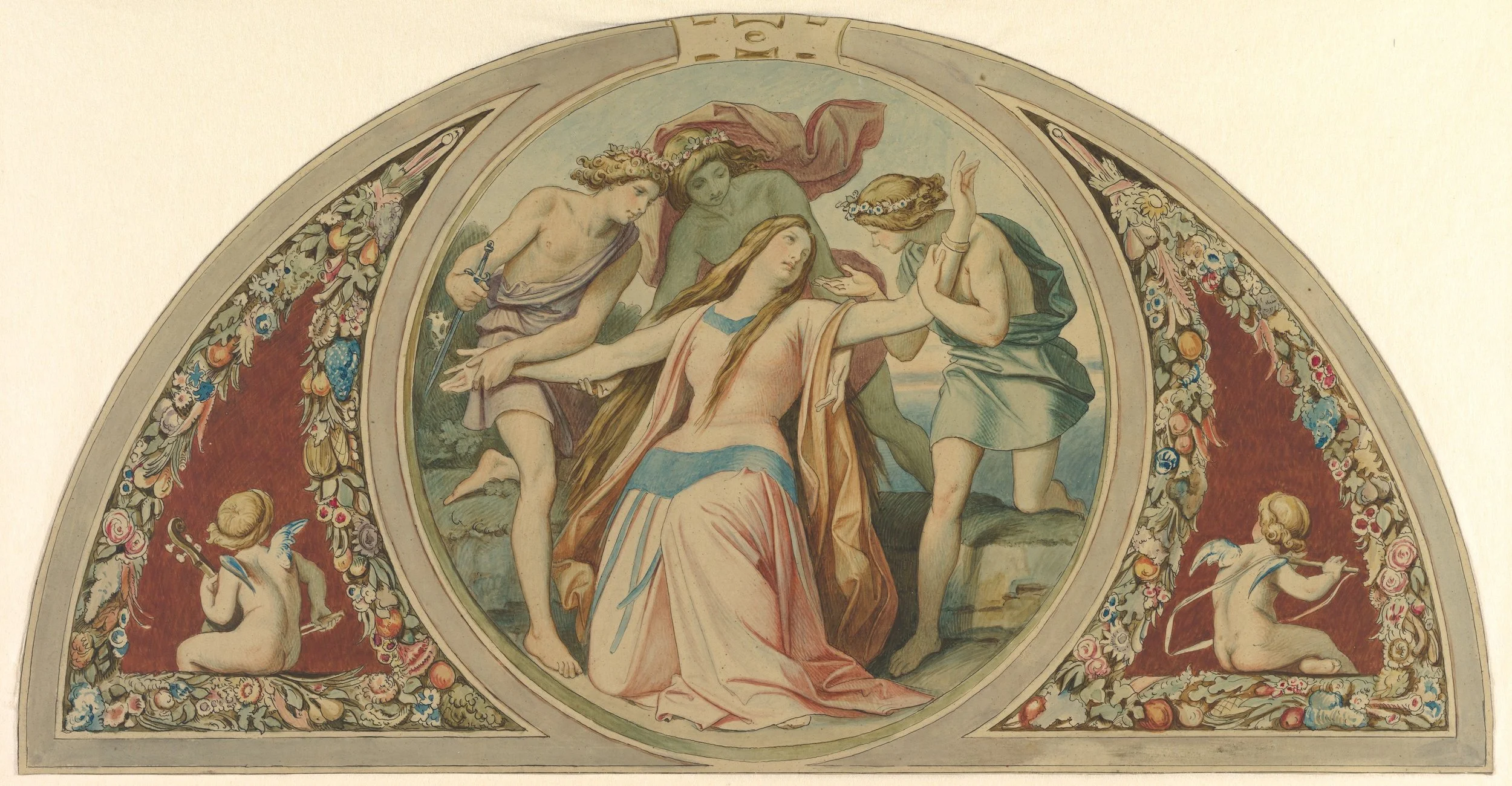
von Schwind, Moritz. Three Boys Save the Despairing Pamina from Suicide. 1864. The Metropolitan Museum of Art, New York.
Changes in mentality and morality have led to a modern rise in suicides, especially in US states with legalized physician assisted suicide. Nationally, there was a 40% surge in suicides in the two decades following the year 2000. Oregon, the first US state to approve assisted suicide, had a dramatic spike in non-medicalized suicide afterwards that peaked at 41% over the already dramatically increased national average. The state of Oregon then spent a great deal of money in attempting to reduce the youth suicide rate with moderate success. These efforts were hampered by the mixed message inherent in legalizing assisted suicide. Disability rights advocates logically point out the double standard of young and healthy people receiving suicide prevention while the elderly, sick, and handicapped get suicide promotion.
When government and medical institutions allow and even encourage the euphemistically termed “medical assistance in dying,” such as in Canada, for growing categories of people, the belief that inevitably permeates society is that certain lives are not worth living.
The unintended but foreseeable effect of facilitating the suicide of those with terminal illness is to encourage other suicides. Aaron Kheriaty M.D., a psychiatrist, told a recent NCBC workshop for bishops that suicide has been shown to spread through social networks up to several degrees of separation. This means that if someone close to you commits suicide, or even a friend of a friend, it increases the risk of taking one’s life for that wider group. Even further out, there is a documented “Werther effect” that involves copycat suicides when there is a widely publicized case. The origin of this term was a novel by Johann von Goethe, The Sorrows of Young Werther, recounting a suicide that led to a wave of imitation suicides. Vulnerable individuals, often adolescents, sometimes identify with the deceased and imitate the method of dying.
The pro-assisted suicide movement attempts to normalize the taking of one’s own life for reasons that begin with terminal illness but frequently expand to chronic conditions or even loss of autonomy or simply being tired of living. They publicized the case of Brittany Maynard who was 29 and had brain cancer. The Compassion and Choices group partnered with her in releasing a video appealing for legalized assisted suicide and received over 9 million views at the time when she took her own life. Many countries censor or severely limit articles and headlines about deaths by suicide precisely because of the known negative effects of such coverage, but this video was allowed to be posted throughout the US. Denise de Ruijter, a Dutch teenager diagnosed with autism and depression, who sought assisted death at 18 due to psychiatric suffering also received a great deal of publicity. Suicide “parties”, or ceremonies where the person gathers friends and family members to say goodbye and then takes lethal drugs during or after the event, are happening with increasing regularity and can only have negative effects on participants and those who hear about them.
All this preventable suicide stems from a key ethical mistake, that we have a right to radical autonomy over life and death. There is in fact no circumstance that would justify taking one’s own life. The Catholic view of the sacredness of human life is that individuals are stewards, not owners, of the gift of their own lives that comes from God. The Catechism of the Catholic Church affirms: “It likewise offends love of neighbor because it unjustly breaks the ties of solidarity with family, nation, and other human societies to which we continue to have obligations. Suicide is contrary to love for the living God” (CCC 2281). We all have the duty to lead our lives in a way that seeks to fulfill God’s plan for us. Human life, even if afflicted by suffering, is always a good and not an evil to be eliminated. The assisted suicide mentality sees suffering as justifying dealing death to the patient, while an ethical medical approach seeks to eliminate or reduce suffering while preserving the life of the patient. A great evil in the promotion of assisted suicide is the complete disregard of our fundamental duty of self-preservation.
Legalized assisted suicide makes suicide more likely for persons who are psychologically vulnerable. Simply knowing that a person has committed suicide is a risk factor for many. The promotion of suicide as a “good and healthy” option by the Final Exit Network and other similar organizations harms not only the sick and elderly but also the depressed and mentally ill who can be seduced by this choice. Every suicide is a tragedy, but this ethical truth is denied by the claim of right to die organizations that some suicides should be celebrated. People have been sucked into the toxic wake of this cult of “good suicide” showing once again how evil grows when the law and society normalize it.
Joseph Meaney, PhD, KM
February 17, 2026
Joseph Meaney received his PhD in bioethics from the Catholic University of the Sacred Heart in Rome. His doctoral program was founded by the late Elio Cardinal Sgreccia and linked to the medical school and Gemelli teaching hospital. His dissertation topic was Conscience and Health Care: A Bioethical Analysis. Dr. Meaney earned his master’s in Latin American studies, focusing on health care in Guatemala, from the University of Texas at Austin. He graduated from the University of Dallas with a BA in history and a concentration in international studies. The Benedict XVI Catholic University in Trujillo, Peru, awarded Dr. Meaney an honorary visiting professorship. The University of Dallas bestowed on him an honorary doctorate in Humane Letters in 2022.