
Forgiveness and Transformation
To view a PDF of this document, click here.
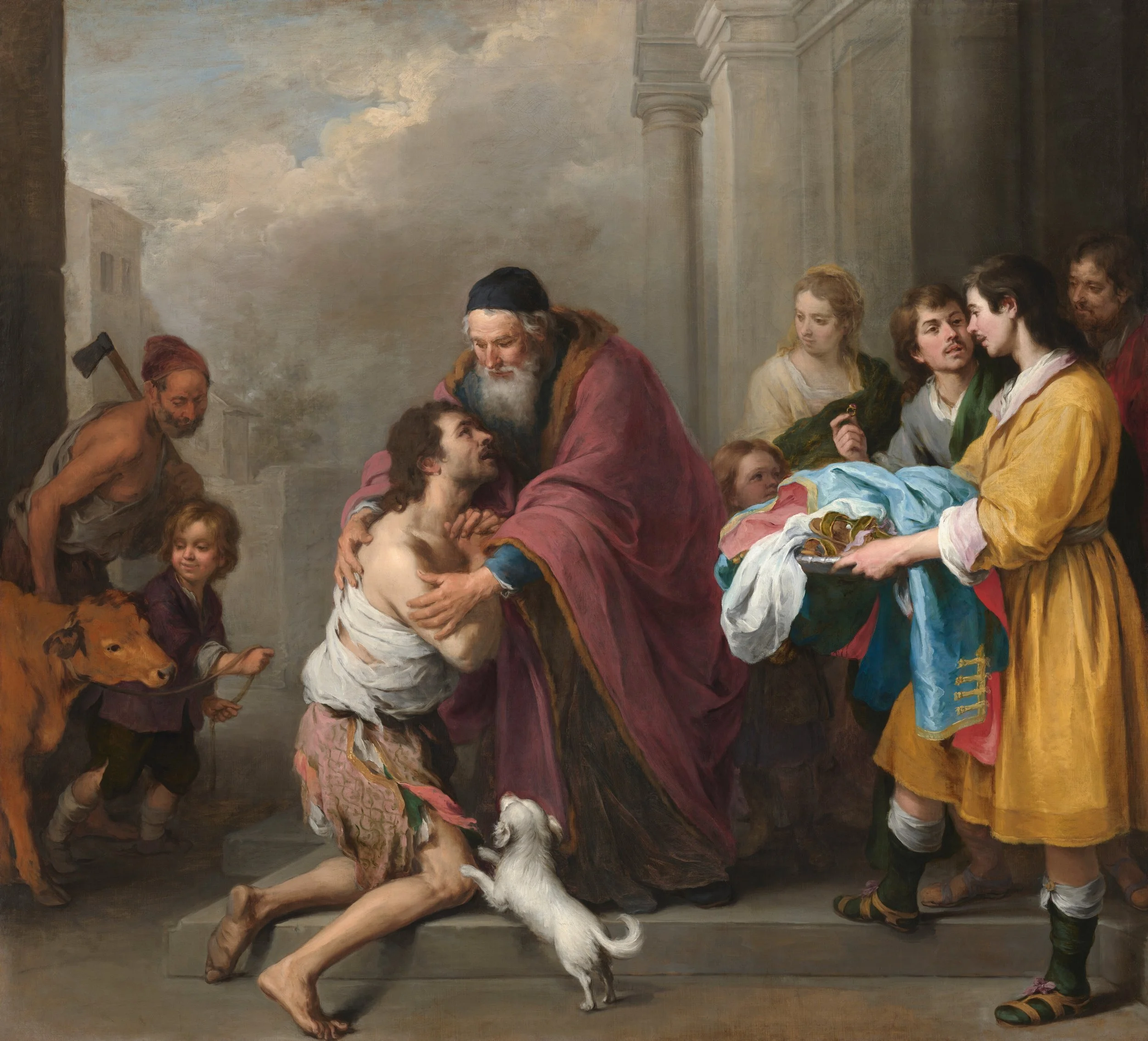
Murillo, Bartolomé Esteban. The Return of the Prodigal Son. 1667/1670. National Gallery of Art, Washington, DC.
Catholic bioethics is centered on seeking to do what is good and avoiding violations of the moral law in health care and scientific research. It should also be concerned with the deep healing that can come from asking for and giving forgiveness. The Christian moral tradition centers on our redemption accomplished by the incarnation of Jesus Christ and his taking on himself the Passion and crucifixion to pay the price for the guilt of all humanity’s sins. The main prayer that Our Lord composed for us calls everyone to ask God for forgiveness for our trespasses but also adds that we should forgive those who trespass against us in equal measure.
Forgiveness can be beneficial on many levels. “The Power of Forgiveness,” an essay reflecting the work of Dr. Tyler VanderWeele of the Initiative on Health, Religion, and Spirituality at Harvard University, cites the ways that forgiveness heals many people. “Observational studies, and even some randomized trials, suggest that forgiveness is associated with lower levels of depression, anxiety, and hostility; reduced substance abuse; higher self-esteem; and greater life satisfaction.” There is an emotional and spiritual side to forgiveness that allows persons to overcome lingering negative feelings towards those guilty of having transgressed against us.
I have witnessed how positively transformative it can be for the dying to ask forgiveness and to give it to those who have hurt them. The purpose of bioethical reflection is not merely to find the minimum we must do in order to avoid an evil action. We should reflect on the fact that the dignity of the human person makes violating another human being’s rights a serious matter. There is an objective ethical requirement that we seek to repair damage we have caused by our misdeeds and to humbly seek pardon from God and those we have harmed. In a more excellent way, exemplified by great saints, we are called to pray for our enemies and love them.
I see the wisdom of Dr. Victor Frankl and others who affirm that by “holding on” to everything from minor slights to major offenses against us we ultimately harm ourselves spiritually. He saw forgiveness as the "gift you give yourself," allowing one to break free from the prison of resentment. We may not be at fault for what happened, but bitterness and anger are corrosive to our physical, emotional, and supernatural well-being. Withholding forgiveness does no good and may plunge us into uncharitable or vengeful thoughts and actions. The only way to break a cycle of tit for tat violence is forgiveness.
Some have the false impression that authentic forgiveness means denying the gravity of what happened or an unhealthy forgetting of the fault. When people say that an evil act is “unforgivable” this reflects an unchristian perspective. Catholics believe that God will always forgive, even the greatest offense, if the sinner repents from the heart. If the person obstinately refuses to seek forgiveness, however, then God respects this free choice. As St. Augustine stated so poetically: “God who created us without our help will not save us without our consent.” I hasten to add that asking forgiveness is not a “get out of jail free card.” The souls of persons who committed grave sins and subsequently repented still need to be purified before they can enter heaven if they do not achieve perfect contrition. Also, we are not called to be naïve and forget transgressions when we give forgiveness or allow ourselves to be victimized again and again. Prudence and self-care go hand in hand with granting forgiveness.
I did at times see an unhealthy attitude in advocating for forgiveness in Italy while I lived there. On several occasions I cringed when the victims of crimes or the loved ones of persons who were murdered were asked on camera if they forgave the perpetrators. It was a form of demanding public forgiveness from traumatized people. This kind of pressure to grant pardon is an ethical violation in itself as it places an additional moral burden on victims and does not respect their moral agency. Requiring forgiveness destroys what must be a free choice just as taking an object makes it impossible for it to be truly a gift.
Mercy and forgiveness are human needs. My father used to say: “There is no justice in this world, and we don’t want it in the next…” We have all sinned and need to seek mercy and pardon rather than justice. Given that this is our situation, is it not logical that we respond by giving forgiveness to others? The paradox is that one does not have a right to the forgiveness we need. It must be a free gift. Thankfully, while human beings only sometimes forgive, Christians believe in a God who ardently desires to wipe away our sins when we turn away from them. Mercy should not be placed in opposition to justice or restitution. Rather it represents a superabundance of love in response to the Prodigal Son acknowledging his fault and returning home.
Joseph Meaney, PhD, KM
March 17, 2026
Joseph Meaney received his PhD in bioethics from the Catholic University of the Sacred Heart in Rome. His doctoral program was founded by the late Elio Cardinal Sgreccia and linked to the medical school and Gemelli teaching hospital. His dissertation topic was Conscience and Health Care: A Bioethical Analysis. Dr. Meaney earned his master’s in Latin American studies, focusing on health care in Guatemala, from the University of Texas at Austin. He graduated from the University of Dallas with a BA in history and a concentration in international studies. The Benedict XVI Catholic University in Trujillo, Peru, awarded Dr. Meaney an honorary visiting professorship. The University of Dallas bestowed on him an honorary doctorate in Humane Letters in 2022.