
Bioethical Insights in Magnifica Humanitas
To view a PDF of this document, click here.
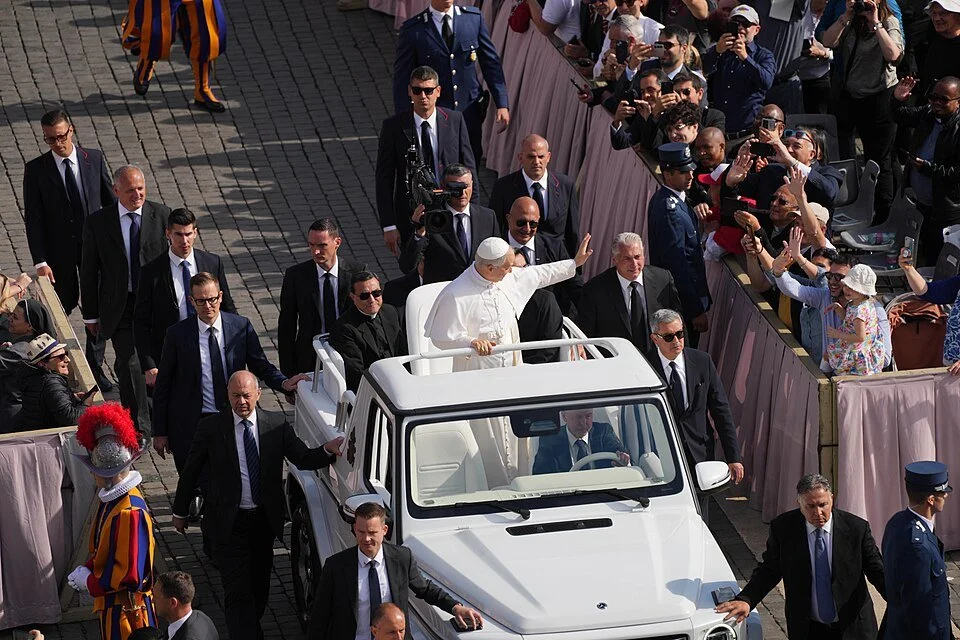
In his first encyclical letter, Magnifica Humanitas, Pope Leo XIV focuses on Catholic Social Teaching as applied to Artificial Intelligence (AI). Within this context, several of his points highlight bioethical challenges in the current digital revolution. The pope reaffirms that AI is a system of advanced data processing that imitates the human intellect but completely lacks a body, emotions, moral conscience, and spiritual capacity. He stresses the harmfulness of the transhumanist and posthumanist technological aspirations that undermine the dignity of the human person in multiple ways. Transhumanism is an ideology that seeks to bypass humanity's biological and moral limitations through technology. As a form of neo-Gnosticism, it emphasizes the superiority of the intellect and the spirit over the body, which is seen as inherently limiting for human persons. Posthumanism goes even farther. As a philosophical and cultural movement, it seeks to overcome or erase the distinct boundaries between human beings and machines. It explicitly rejects the view that human nature is something precious that must be respected. Bioengineering and digital augmentation that radically alter human beings and transform them into a “superior” and possibly disembodied existence is a posthumanist goal. Trans and post humanists frequently incorporate extensive use of AI into their plans for humanity.
Pope Leo makes his own the criticism offered by Pope Francis of a “technocratic paradigm” dominated by a logic of efficiency, control, and profit. An interesting assertion in the encyclical is that we run a serious risk of people “having more without being more” if technological development is not guided by an authentic moral and social program. The document is full of quotable phrases such as, “truth is a gift to be shared, not a possession to be monopolized.” In some ways the parts are better than the whole. So many different images and ideas are presented that the encyclical feels fragmented. The initial biblical reference used is a warning not to build a technological Tower of Babel that could call down God’s wrath. The new Babel is presented as an “idolatry of profit that sacrifices the weak” and a uniformity that falsely tries to reduce the mystery of the person into data and performance. Rather, the pope says, we should pursue AI development as the prophet Nehemiah did with the reconstruction of the fortified walls of Jerusalem. He points to, “the possibility of building together, of transforming diversity into a resource and of making listening and dialogue the common ground upon which to cultivate justice and fraternity.”
There are good insights into the practical realities of technology today.
Technology has the power to heal, connect, educate and protect our common home; but it can also divide, exclude and generate new forms of injustice. In the abstract, technology in and of itself is not a solution to humanity’s problems, just as it is not inherently evil. In practice, however, technology is never neutral, because it takes on the characteristics of those who devise, finance, regulate and use it.
The Church does not reject AI or any other technology, but she does insist on the ethical responsibilities of both the creators and users of these new and extremely powerful tools. We can see some of the risks of AI clearly, such as the de-skilling of students and workers, and the addictive behaviors, reductions in attention span, and other mental health problems associated with it. Pope Leo states that “every technology shapes those who use it.” This is particularly relevant to AI, which has tremendous potential to undercut the education of children and youth.
The majority of the encyclical dwells on the dangers of this technology and calls for AI to be “disarmed.” Pope Leo demands action. “To disarm does not mean rejecting technology but preventing it from dominating humanity. It means freeing technology from monopolistic control and opening it to discussion and debate, therefore making it human-friendly and restoring it to the plurality of human cultures and ways of life.” The pope insists that neither he nor the Church are against technological progress, and AI has achieved some remarkable gains in making complex information easily accessible. Nonetheless, most of the encyclical identifies risks and how to remediate them.
Magnifica Humanitas continues a recent trend in highlighting the serious dangers of transhumanism and posthumanism as did the previous church document on AI, Antiqua et Nova, from 2025. Quo Vadis Humanitas? from the International Theological Commission laid out a massive Catholic critique of these ideologies earlier in 2026. In the recent past these currents of thought were mainly theoretical. The future of AI, however, has the potential to be guided by posthumanist ideas or Christian ones, so the pope clearly felt an urgency to write on this subject. Pope Leo offers a contrasting Christian vision to the “enhanced and almost disembodied humanity” advocated by transhumanism and posthumanism. Instead of trying to overcome limitations by using technology, the Church points to the Son of God’s incarnation and his taking upon himself our weakness in order to provide salvation and freedom from the slavery of sin.
Joseph Meaney, PhD, KM
June 23, 2026
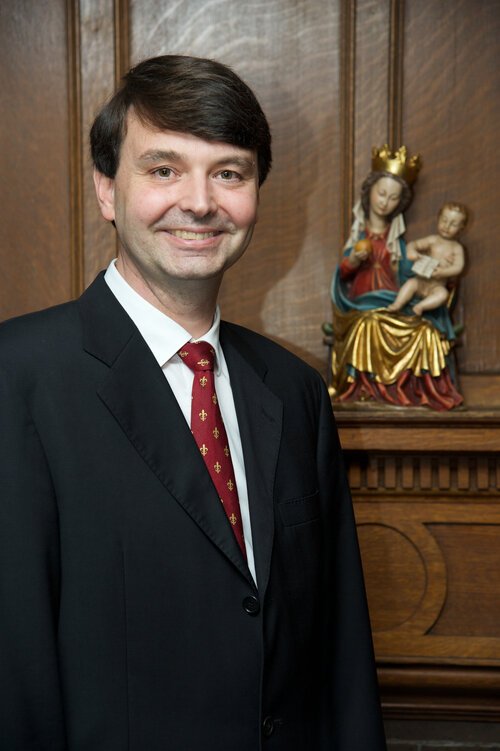
Joseph Meaney received his PhD in bioethics from the Catholic University of the Sacred Heart in Rome. His doctoral program was founded by the late Elio Cardinal Sgreccia and linked to the medical school and Gemelli teaching hospital. His dissertation topic was Conscience and Health Care: A Bioethical Analysis. Dr. Meaney earned his master’s in Latin American studies, focusing on health care in Guatemala, from the University of Texas at Austin. He graduated from the University of Dallas with a BA in history and a concentration in international studies. The Benedict XVI Catholic University in Trujillo, Peru, awarded Dr. Meaney an honorary visiting professorship. The University of Dallas bestowed on him an honorary doctorate in Humane Letters in 2022.