
Dignitas Cerebri
To view a PDF of this document, click here.
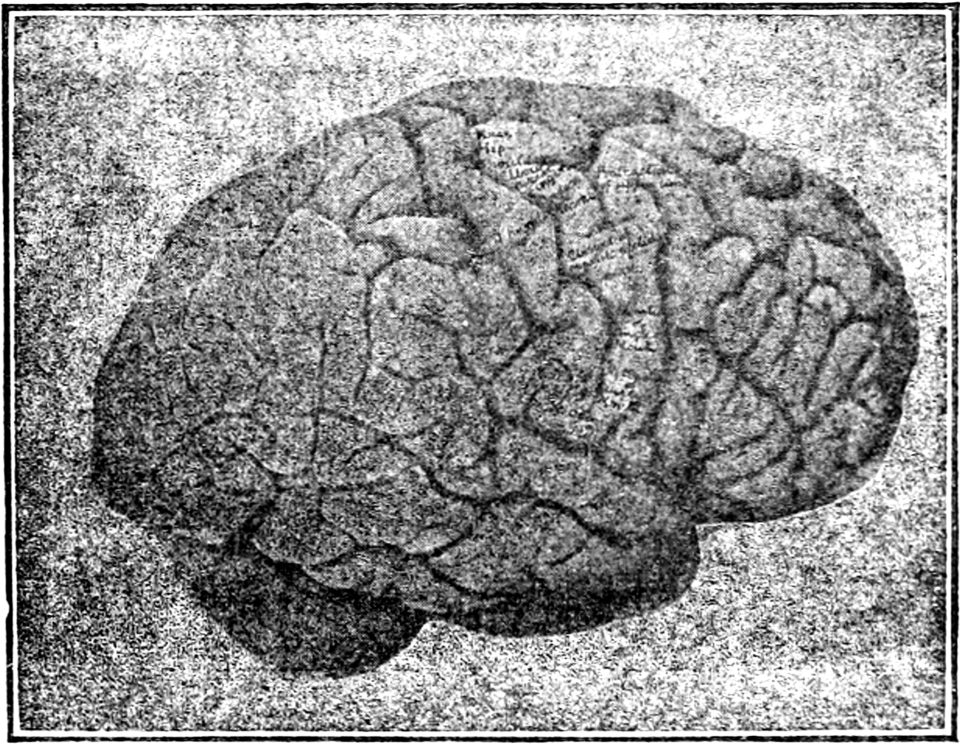
It sounds like science fiction or fake news: “Not alive, but not dead: disembodied human brains used for drug testing.” Unfortunately, it is quite real and extremely troubling. A company located next to Yale University, Bexorg, is obtaining human brains for experiments from organizations that procure donated organs for transplantation. This alone raises an ethical red flag, as I will explain later. Then they use a machine they developed called BrainEx to sustain the organ with artificial fluids that provide oxygen and filter waste through four sutured plastic ports where the blood vessels had previously been attached to the person’s body. Lab techs inject the anesthetic propofol in order to prevent any electrical activity in the brain. Then for 24 hours they administer experimental drugs and use sensors to record the reactions in the brains as they metabolize chemicals. Finally, they slice the brains into hundreds of pieces for further study. Over 700 human brains have undergone this process, and they are scaling up to be able to handle 1,600 brains a year soon.
The Catholic Church has long accepted that people may donate their organs for transplantation or medical research for ethically legitimate purposes as long as vital organs are only removed after determination of death has been made using well-founded medical criteria establishing with moral certitude that the person is truly deceased. (See Directive 64 of the latest edition of the Ethical and Religious Directives for Catholic Health Care Services from the United States Conference of Catholic Bishops.) Furthermore, the New Charter for Health Care Workers, issued by the Pontifical Council for Pastoral Assistance to Health Care Workers, insists the following in section 119. Transplanting the human brain is ruled out as an ethical possibility, as well as human gonads, as they are connected to the identity and uniqueness of the person that should be safeguarded by sound medical practice. Therefore, although it can be ethical to dissect the brains of people for scientific research if they gave proper informed consent for the use of their bodies for medical research after death, artificially keeping disembodied brains functioning after the person has been declared dead raises tremendous concerns.
Bexorg realizes this and has remained quite secretive about their activity until just recently. They have six ethicists on their advisory board who have approved their protocols. The most significant safeguard in place is anesthetizing the brains to preclude electrical activity and the possibility of coordinated neural firing needed for consciousness. Their argument is essentially that the donor died and they are only reviving certain metabolic functions of the brain and therefore not reviving the person. This cannot be accepted from a Catholic perspective. Partial brain death has never received any endorsement from magisterial authorities. In fact, quite the opposite, the brain has been specifically excluded from the list of organs that can be transplanted or, by inference, kept alive separately from the body.
Scientists offer pragmatic reasons for doing these experiments pointing out the shortcomings of using animal brains for testing drugs meant for humans and the fact that the US government is discouraging animal research. All of this leads to the most important question. Is this in keeping with respect for the immense dignity of the human person? In the future, Bexorg is hoping to maintain brains in their BrainEx machines for periods as long as two weeks in order to be able to study brain plasticity when treatments are administered and not just the metabolization of and reactions to different drugs.
This company began by doing essentially the same thing to pig brains but faced criticism. There were concerns about the pigs retaining traces of consciousness or memories or even feeling pain. Now they are keeping human brains partially alive and think that by applying anesthesia they have resolved the ethical objections people or institutions might have! The brain may not have consciousness when persons are in a deep coma, but they are still alive and must be treated respectfully and have all ordinary means of care given to them. The only experiments on a living human brain that might be ethically justified would involve a therapeutic purpose for the patient and only if there was a chance of success and proper informed consent was given. There is no scenario where persons can ethically agree for their brains to be removed and partially revived.
Bexorg seems guided only by utilitarian ethics. This technology enables more efficient medical research to take place in view of creating new drug therapies. Even if this is true, it cannot justify experiments on living disembodied human brains. C.S. Lewis raised a similar scenario of a severed human head kept alive by cunning techniques in his science fiction novel, That Hideous Strength. In the book, the living head was part of a demonic attack on humanity. I cannot see any way that the current excruciating and non-fiction experiments taking place can be ethical or should be allowed to continue.
Joseph Meaney, PhD, KM
July 21, 2026
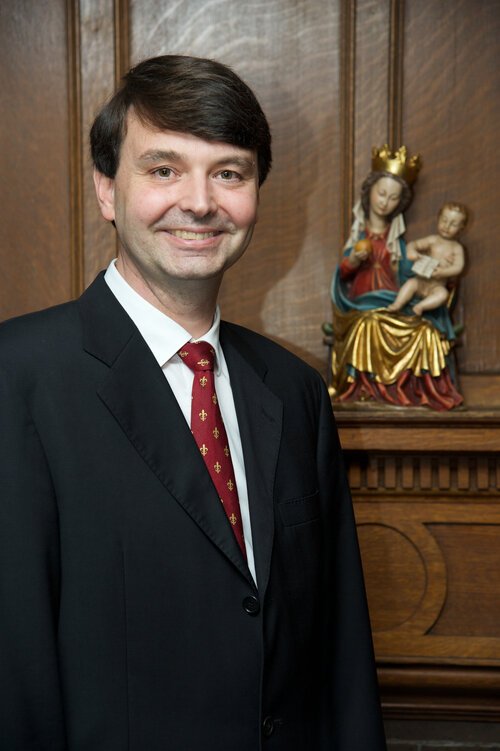
Joseph Meaney received his PhD in bioethics from the Catholic University of the Sacred Heart in Rome. His doctoral program was founded by the late Elio Cardinal Sgreccia and linked to the medical school and Gemelli teaching hospital. His dissertation topic was Conscience and Health Care: A Bioethical Analysis. Dr. Meaney earned his master’s in Latin American studies, focusing on health care in Guatemala, from the University of Texas at Austin. He graduated from the University of Dallas with a BA in history and a concentration in international studies. The Benedict XVI Catholic University in Trujillo, Peru, awarded Dr. Meaney an honorary visiting professorship. The University of Dallas bestowed on him an honorary doctorate in Humane Letters in 2022.