
The Extremes of Laxism and Rigorism
To view a PDF of this document, click here.

Bioethicists can fail in their ethical duties by falling into laxism or rigorism. The first is more characteristic of contemporary times. In most areas present civilization seems intent on relaxing standards and rules. Laxism can be defined as “the moral system according to which a person in a doubt of conscience about the morality of a certain course of action, may safely follow the opinion for liberty provided that it possesses any probability whatsoever.” In short, any possibility that an action might be moral justifies action. This system of thought was condemned by Pope Innocent XI in 1679, but he also joined previous pontiffs in denouncing rigorism. Nevertheless, it seems that society is more likely today to push for loose enforcement of ethical norms rather than taking a strict attitude.
In Catholic bioethics laxism is most often seen where liberals find Church teaching too demanding. Contraception, sterilization, and abortion come to mind. Since the Principle of Double Effect allows one to tolerate an evil side effect if one is seeking a proportionately greater good, some are quick to “give permission” to go on the Pill in order to treat acne or to contracept when taking a drug for the purpose of treating a medical condition that would harm a preborn baby. In the latter case, a couple should indeed postpone pregnancy by using highly accurate fertility awareness methods to achieve this goal rather than unethical birth control. A laxist approach encourages opportunistic bilateral salpingectomies — removal of the fallopian tubes — as an ovarian cancer prevention intervention that is also sterilizing even when there is no known higher risk factor for the woman in question that might validly justify the procedure.
When a pregnant mother’s life is at risk, medical professionals typically are pressured to automatically sacrifice the life of the preborn child. Ethically speaking, one should exhaust all reasonable possibilities in trying to save both mom and baby and refuse any form of direct abortion. The Catholic position avoids both laxism and rigorism. The USCCB’s Ethical and Religious Directives for Catholic Health Care Services, 7th ed., allow “treatments or medications for the cure of a proportionately serious pathological condition of a pregnant woman” even if they are foreseen to result in the death of the preborn child, if they cannot be safely postponed until the fetus can survive outside the womb (ERD # 47). They neither condone abortion nor say that nothing can be done.
A definition of rigorism is “the moral system according to which, in every doubt of conscience as to the morality of a particular course of conduct, the opinion for law must be followed.” This disposition is a conservative temptation towards unbending adherence to moral principles to the detriment of relevant special circumstances. It can be an overreaction to “situation ethics” which falsely tries to make the circumstances surrounding an action matter more than the intrinsic nature of an act.
In bioethics rigorism is especially problematic when the particular circumstances are the decisive factor in an ethical analysis. Catholic teaching is that people have a moral obligation to accept ordinary means of care to preserve their lives. Extraordinary or disproportionate means are morally optional. It can be difficult, however, to discern if a procedure or intervention offers a reasonable hope of benefit and does not impose excessive burdens. The rigorist might focus on the truth that life is precious and insist on doing every possible medical intervention to keep a patient alive. There are cases, however, where individuals may find continuing a treatment or starting a new one terribly painful or burdensome and they feel prepared to accept a natural death and entrance into eternal life. The unprecedented progress of biomedical science can contribute to a wrongly perceived obligation that one is morally required to “try everything.”
Venerable Pope Pius XII explained Catholic teaching on ordinary vs. extraordinary means in an address to an international congress of anesthesiologists on November 24, 1957. He affirmed that the Church refuses to place stricter obligations on Catholics that go beyond using the ordinary means that are morally essential. Pope Pius XII said the Church does not want to lay extra burdens on people as this could be too difficult for them to carry. This recalls the condemnation by Jesus of the Pharisees who were rigorists. Pius XII wanted to avoid both laxism and rigorism by adhering to ethical principles without watering them down or interpreting them more strictly than necessary.
Aristotle’s reflection that virtue is generally found in the mean between two extremes was adopted by St. Thomas Aquinas, whose approach to ethics the Church relies on extensively. Some say the Church condemns both laxism and rigorism but leans towards rigorism. Laxism has traditionally been viewed as the worse vice. Nevertheless, Catholic bioethics rejects inflexibility and urges true compassion for the suffering. There is no fixation with “applying the rules” without regard for relevant circumstances. The distinction between ordinary and extraordinary means was specifically developed to prevent rigorism. A balanced approach avoids both bending ethical rules and imposing rigid guidelines on complicated situations. When Catholic bioethics is done well, it respects this middle path.
Joseph Meaney, PhD, KM
May 12, 2026
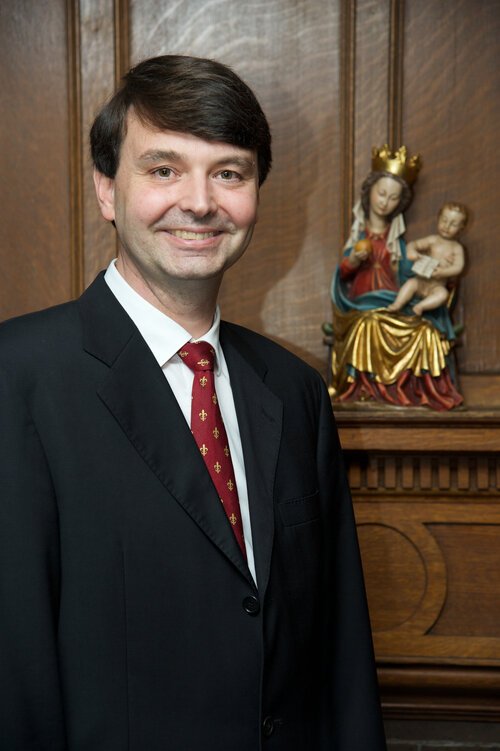
Joseph Meaney received his PhD in bioethics from the Catholic University of the Sacred Heart in Rome. His doctoral program was founded by the late Elio Cardinal Sgreccia and linked to the medical school and Gemelli teaching hospital. His dissertation topic was Conscience and Health Care: A Bioethical Analysis. Dr. Meaney earned his master’s in Latin American studies, focusing on health care in Guatemala, from the University of Texas at Austin. He graduated from the University of Dallas with a BA in history and a concentration in international studies. The Benedict XVI Catholic University in Trujillo, Peru, awarded Dr. Meaney an honorary visiting professorship. The University of Dallas bestowed on him an honorary doctorate in Humane Letters in 2022.