
Celebrating the New Revision of the ERDs
To view a PDF of this document, click here.
The United States Conference of Catholic Bishops (USCCB) voted overwhelmingly to approve the seventh edition of the Ethical and Religious Directives for Catholic Health Care Services (ERDs) at its November 2025 meeting. The ERDs now notably includes an explicit prohibition against "gender-affirming care" at Catholic hospitals as well as many other beneficial updates to the text.
The National Catholic Bioethics Center (NCBC) issued a press statement welcoming the new ERDs and expressing gratitude to the bishops for consulting with the NCBC during the drafting of the new document. The NCBC’s president, Dr. John A. Di Camillo, emphasized that the ERDs “are a major touchstone for the mission and work of the NCBC.” He added, “We are ready to assist with the implementation of this seventh edition of the ERDs in dioceses and health care systems around the country. Now more than ever, our world needs this clearsighted moral guidance rooted in the dignity of the human person.”
Since 1971, the USCCB has published the ERDs to distill magisterial teachings and the Catholic moral tradition into a practical and succinct normative guide for Catholic health care in the United States. The ERDs are the most comprehensive and consistent framework of Catholic health care ethics serving not only Catholic health care ministries and professionals but also for ethicists and lay people seeking to apply Catholic moral principles in health care decision-making.
A revision of the ERDs was initiated in 2023 principally to provide clear guidance on medical interventions related to gender identity. The revised Directive 28 now proscribes “interventions, whether surgical, hormonal, or genetic, that aim not to restore but rather to alter the fundamental order of the body in its form or function.” This includes procedures and treatments intended to transform a person's distinctive sexual traits to resemble those of the opposite sex or to nullify the body’s sexual characteristics. This formalizes earlier guidance from the USCCB Doctrine Committee, notably the 2023 Doctrinal Note on the Moral Limits to Technological Manipulation of the Human Body. Previous editions of the ERDs (in 1995, 2009, and 2018) had not explicitly addressed the transgender issue in health care.
The prohibition on interventions or actions supportive of the transgender ideology is framed in the context of Catholic theology and anthropology. The Church views the human person as a unity of body and soul and affirms that one’s biological sex is a gift from God when we are created that should be accepted and respected. Directive 28 references both the encyclical Amoris Laetitia and the Dicastery for the Doctrine of the Faith’s 2024 declaration on human dignity, Dignitas Infinita.
This seventh edition of the ERDs constitutes the most extensive revision since 1994 with changes to four of the six component parts of the document. Below are just a few highlights of other modifications. The seventh edition explicitly prohibits Catholic health care professionals and institutions from referring patients for interventions that violate the moral law. It also shortens and sharpens directive 39 with clear condemnation of the cryopreservation of embryos and gametes and post-mortem gamete retrieval. Voluntary Stopping Eating and Drinking (VSED) is included and defined as a form of suicide that should not be facilitated by Catholic health care institutions, and Catholic health care professionals are exhorted to make every effort to dissuade patients from VSED. The full range of ethical multidisciplinary palliative care was endorsed for the first time in this latest edition of the ERDS.
Directive 45 was edited to clarify the definition of abortion and is now even more comprehensive than in past editions. Procured abortion is now defined as the “deliberate and direct killing, by whatever means it is carried out, of a human being in the initial phase of his or her existence, extending from conception to birth.” The text affirms that “the removal of a living embryo or fetus from the uterus before viability is an abortion.” They added that the “removal after viability with the intent for it to result in the death of a living fetus is also an abortion.”
It is a blessing for Catholics to have updated ethical guidance from U.S. bishops in the fast-evolving area of biomedicine. The Church seeks to ponder well before pronouncing herself, but also to provide timely instruction. This latest revision of the ERDs was the fruit of a more than two-year process originating with the Doctrine Committee of the USCCB and included input from the Roman Curia. Given the increased pace with which science and technology are developing, one can reasonably expect that the ERDs will require another update in the next few years. The average time between revisions has been decreasing. One of the most likely areas needing to be addressed soon is the ethical use of Artificial Intelligence or AI that is emerging as a new challenge in health care and many other fields.
Joseph Meaney, PhD, KM
December 10, 2025
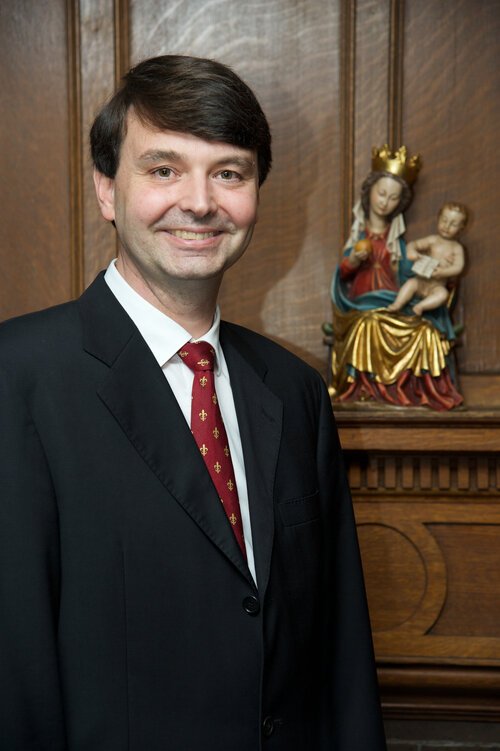
Joseph Meaney received his PhD in bioethics from the Catholic University of the Sacred Heart in Rome. His doctoral program was founded by the late Elio Cardinal Sgreccia and linked to the medical school and Gemelli teaching hospital. His dissertation topic was Conscience and Health Care: A Bioethical Analysis. Dr. Meaney earned his master’s in Latin American studies, focusing on health care in Guatemala, from the University of Texas at Austin. He graduated from the University of Dallas with a BA in history and a concentration in international studies. The Benedict XVI Catholic University in Trujillo, Peru, awarded Dr. Meaney an honorary visiting professorship. The University of Dallas bestowed on him an honorary doctorate in Humane Letters in 2022.