
The Ethics of Gene Editing
To view a PDF of this document, click here.
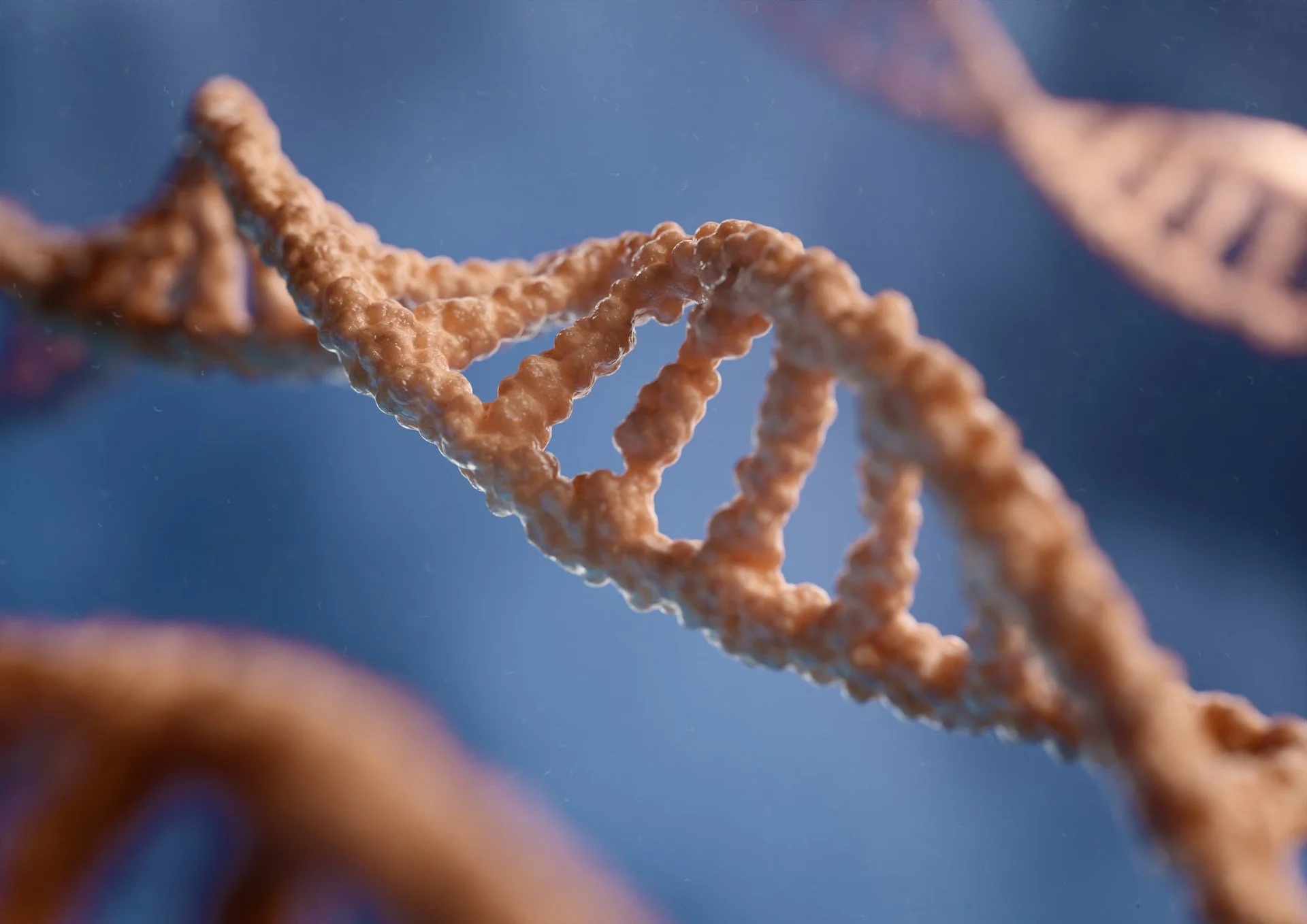
Advances in precise gene editing and effective gene therapies make the ethics of human genetic manipulation an urgent issue. This essay was inspired by Dr. Marilyn Coors, who edited Contemporary Bioethics with the NCBC and wrote its chapter on genome editing. Drawing on the wisdom of Pope St. John Paul II, she warned that gene editing and access to genetic testing could readily lead to the ethical violations inherent in eugenic practices. Eugenics is a discredited, deeply unethical ideology that seeks to “improve” the human gene pool through selective breeding, reproductive control, or genetic manipulation. I wholeheartedly share her conviction that genome editing requires great humility and prudence.
It is remarkable that Pope John Paul II already spoke to the ethics of genetic manipulation in 1983 when he gave an address to the World Medical Association.
A strictly therapeutic intervention whose explicit objective is the healing of various maladies such as those stemming from deficiencies of chromosomes will, in principle, be considered desirable, provided it is directed to the true promotion of the personal well being of man and does not infringe on his integrity or worsen his conditions of life. Such an intervention indeed would fall within the logic of the Christian moral tradition, as I said when speaking to the Pontifical Academy of Sciences on 23 October 1982.
John Paul II advanced the very reasonable position that if gene therapies are safe and effective and only used to heal abnormal genetic conditions that cause illness and death, they could in principle be ethically fine. He had seen the danger already appearing on the horizon of scientists making gene edits not so much to heal patients as to create “enhanced” human beings.
Genetic engineering, particularly at the level of human embryos, is a frightening reality. All indications point to it serving as a tool to guarantee certain genetically influenced traits such as height, intelligence, etc. Eugenicists in the past only dreamed of having this kind of raw power to change future generations of human beings. In 2008 the Congregation for the Doctrine of the Faith issued an important document, Dignitas Personae, that addressed the issue of germ-line genetic editing in section 26. The conclusion at that time was the following: “Because the risks connected to any genetic manipulation are considerable and as yet not fully controllable, in the present state of research, it is not morally permissible to act in a way that may cause possible harm to the resulting progeny.” It pointed out that genetic modifications to human embryos presuppose their conception in vitro, which is already a grave ethical transgression.
There have been unprecedented practical results of gene therapies in recent years. It is now possible to completely heal people of sickle cell disease. The genetic modification therapy does remain out of reach for most persons suffering from the disease, however, because of the huge cost. Although the U.S. Food and Drug Administration approved two gene therapy protocols for sickle cell disease in 2023, it is estimated that only about 164 individuals have received the treatment so far. It is remarkable to be able to cure people of a genetically caused disease, but the current price tag, between 2 and 3 million dollars, is daunting. Nevertheless, this is exactly the kind of genetic modification intervention that can be ethically acceptable. Hopefully it will become less expensive in the future and not take as long as it currently does. This is quite possible if recent history in other areas of technical progress in medicine is a guide.
It is very important that regulations and laws be created to prevent scientists from imposing genetic modifications on embryos that would serve a transhumanist or eugenicist agenda. We have already had the troubling case of Chinese scientist He Jiankui who successfully did gene edits on three embryos in 2018. When these children were born there was international outrage and he was sentenced to three years in jail and a substantial fine. Hopefully such punishment will dissuade others from following He Jiankui’s example, but he was working in China. Many wonder if the Chinese government might change its stance if other countries started to allow these kinds of practices. It is already the case that in vitro fertilization companies advertise genetic screening of embryos for desirable traits and from this it is only a small step to gene editing for the creation of “enhanced” children. Faced with this real possibility, bioethicists have a major responsibility to communicate how some forms of gene editing are radically contrary to the unique dignity of the human person.
Joseph Meaney, PhD, KM
November 24, 2026

Joseph Meaney received his PhD in bioethics from the Catholic University of the Sacred Heart in Rome. His doctoral program was founded by the late Elio Cardinal Sgreccia and linked to the medical school and Gemelli teaching hospital. His dissertation topic was Conscience and Health Care: A Bioethical Analysis. Dr. Meaney earned his master’s in Latin American studies, focusing on health care in Guatemala, from the University of Texas at Austin. He graduated from the University of Dallas with a BA in history and a concentration in international studies. The Benedict XVI Catholic University in Trujillo, Peru, awarded Dr. Meaney an honorary visiting professorship. The University of Dallas bestowed on him an honorary doctorate in Humane Letters in 2022.